


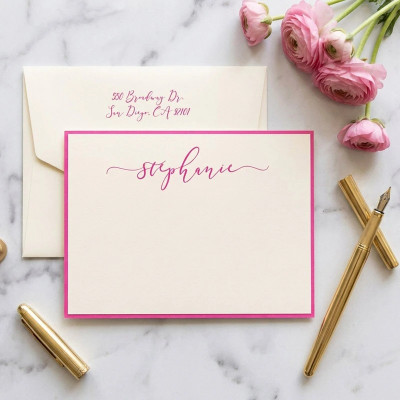
What Is a Correspondence Card? A Guide to Personalized Flat Card Stationery
Posted by StationeryXpress on on Sep 28th 2026
If you’ve been shopping for personalized stationery, you may have seen the term “correspondence card” and wondered exactly what it means.
A correspondence card is a flat, heavyweight stationery card designed for short handwritten notes. It is typically personalized with a name, monogram, initials or company logo and paired with a matching envelope.
Unlike a folded note card, a correspondence card does not open. You write your message directly on the front or back of the flat card, depending on the design.
That simple format makes correspondence cards one of the most versatile forms of personalized stationery.
What Are Correspondence Cards Used For?
Correspondence cards work best when your message is personal but relatively brief. They can be used for:
- Thank-you notes
- Professional follow-ups
- Client correspondence
- Congratulations
- Hostess notes
- Short personal letters
- Gift enclosures
- Everyday handwritten messages
Because the card itself is substantial and personalized, even a few handwritten sentences can feel polished and intentional.
Are Correspondence Cards the Same as Flat Cards?
In modern stationery terminology, correspondence cards and flat cards generally refer to the same basic format: a single flat piece of cardstock accompanied by an envelope.
“Correspondence card” describes the traditional purpose of the stationery, while “flat card” describes its physical format.
At StationeryXpress, personalized flat cards are available with options including raised ink, embossing, monograms and custom personalization.
Correspondence Cards vs. Fold Notes: What’s the Difference?
The biggest difference is the construction.
A correspondence card is flat, while a fold note folds in half and opens like a small greeting card.
Correspondence cards are especially convenient for concise notes. Fold notes provide additional writing space and keep the handwritten message hidden until the recipient opens the card.
Neither format is inherently more formal. The paper, printing method, typography and personalization can make either style casual, professional or elegant.
How Big Is a Correspondence Card?
There is no single required correspondence-card size. Personalized flat cards are produced in several dimensions depending on the stationery design.
For example, StationeryXpress offers substantial personalized flat-card designs measuring approximately 4.5 x 6.25 inches, a size that provides enough room for a meaningful handwritten message without feeling like a full sheet of letter paper.
When choosing a size, think about how much you typically write. Smaller cards work beautifully for concise thank-yous, while larger correspondence cards provide more room for longer messages.
What Paper Is Best for Correspondence Cards?
A heavier paper stock gives correspondence cards their signature substantial feel.
StationeryXpress offers personalized flat cards on heavyweight stocks, including triple-thick 140 lb. cover stock on select designs. By comparison, fold notes need to remain flexible enough to fold cleanly, so they may use a lighter stock.
Thick paper also works particularly well with tactile personalization techniques such as embossing and raised ink.
Should Correspondence Cards Have Your Full Name or Monogram?
Both are appropriate. The best choice depends on how you plan to use the stationery.
Full name: Versatile for personal and professional notes.
First name: Friendly and informal for personal correspondence.
Initials or monogram: Classic and gift-friendly.
Company logo: Appropriate for client thank-yous, executive correspondence and branded business notes.
If you want one stationery set that works across many situations, simple typography with your full name or initials is an especially versatile choice.
Are Correspondence Cards Appropriate for Business?
Yes. Personalized correspondence cards are particularly useful in business because they make short handwritten messages feel more intentional than an email while remaining less formal than a full business letter.
They can be used to thank a client, acknowledge a referral, follow up after a meeting, congratulate an employee or add a handwritten message to a corporate gift.
For company use, choose clean typography or custom logo stationery that complements your existing brand.
Can You Use a Correspondence Card for a Thank-You Note?
Absolutely. Thank-you notes are one of the most common uses for correspondence cards.
A simple thank-you note does not need to be long. Mention what you are thanking the recipient for, add one specific detail about why you appreciated it, and close with a warm final sentence.
The personalized card provides the presentation; your handwritten message provides the meaning.
Are Personalized Correspondence Cards a Good Gift?
Personalized correspondence cards can make a thoughtful gift because they are both personal and practical.
They work especially well for:
- Graduates
- Teachers
- Newlyweds
- New homeowners
- Professionals
- Hosts and hostesses
- Birthdays
- Holidays
A monogram, initials or name makes the gift feel selected specifically for the recipient rather than purchased at the last minute.
How Many Correspondence Cards Should You Order?
The right quantity depends on how frequently you write.
A smaller set is useful if you are trying personalized stationery for the first time or choosing a design for a specific occasion. Larger stationery sets are convenient for people who regularly send thank-you notes, business correspondence or personal messages.
Keeping a stack of personalized cards and envelopes somewhere easy to reach also makes it much more likely that you’ll actually send the note you’ve been meaning to write.
Choosing the Right Personalized Correspondence Cards
Start with three decisions: format, paper and personalization.
Choose a flat correspondence card if you prefer a clean, modern format for shorter notes. Select a heavier stock if you want a substantial feel. Then choose personalization—such as embossing, raised ink, a monogram or logo—that reflects how you intend to use the cards.
StationeryXpress has specialized in personalized stationery since 1993, with made-to-order options produced in the USA including personalized flat cards, fold notes, embossed stationery, raised ink stationery and custom logo stationery.
A correspondence card may be simple, but that’s exactly what makes it useful: a beautiful piece of paper, your name at the top and enough space to say something worth remembering.